
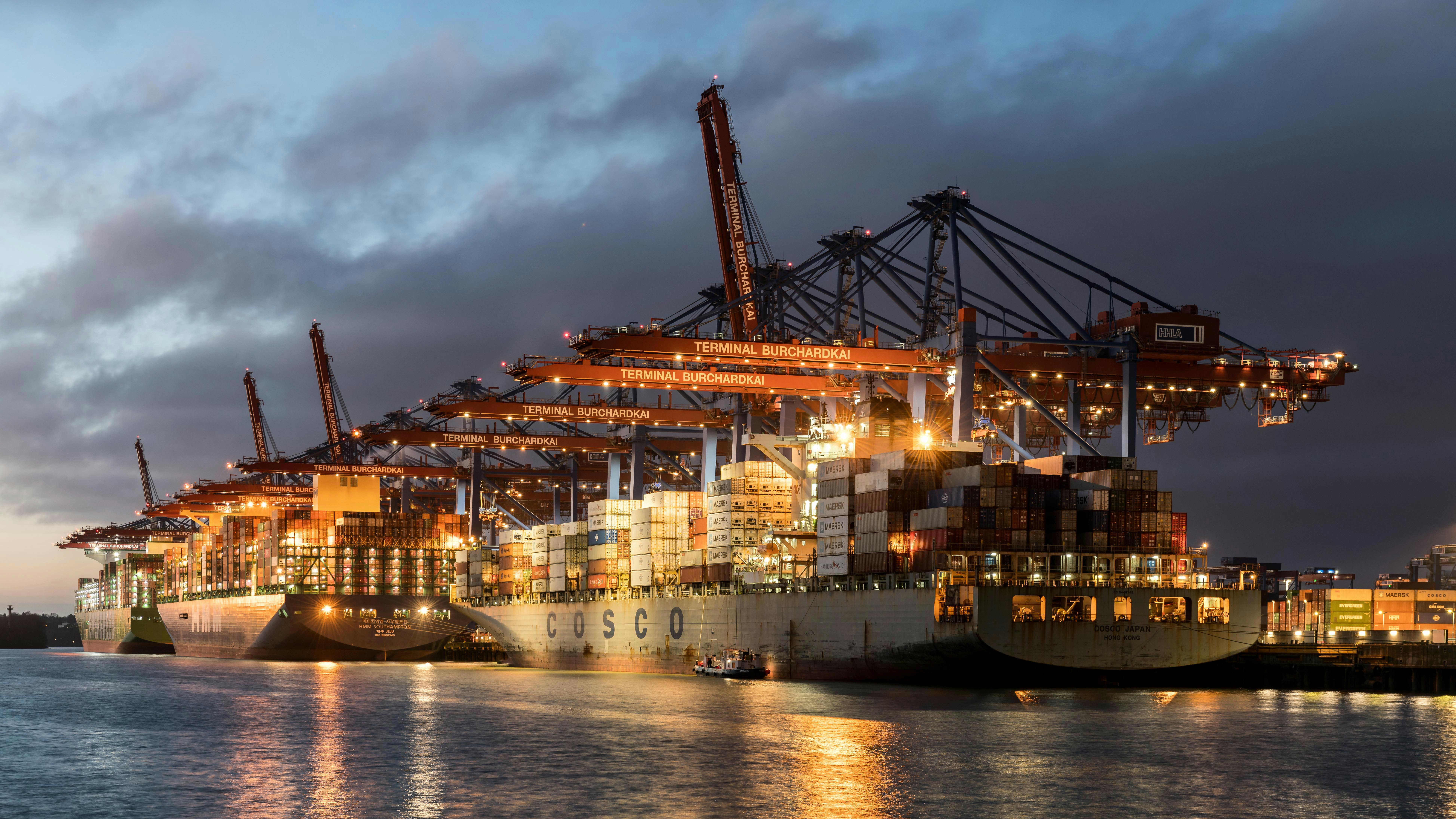

In recent months, global maritime transport has faced an unprecedented series of challenges that have created a perfect storm in ports worldwide. From pirate attacks to political instability and drought, these factors have converged to cause significant disruptions in the global supply chain, severely affecting logistics and international trade.
The Port of Algeciras: A Microcosm of Global Congestion
Arriving at the port of Algeciras in southern Spain, the magnitude of the problem is evident. Cranes operate nonstop, moving containers between ships and terminals. Alonso Luque, CEO of TTI Algeciras, highlights that they have had to reject numerous additional cargo requests due to the port’s limited capacity. «Our capacity is quite limited,» he says, pointing to stacks of containers reaching the maximum allowed height of five tiers.
Diversions and Congestion: The Impact of Conflicts in the Middle East
The situation in Algeciras is reflected in many other ports around the world, exacerbated by the diversion of traditional maritime routes. The decision to avoid waters near Yemen due to attacks by Houthi militias has reduced container ship arrivals in the Gulf of Aden by 90%. This diversion prolongs voyages by nine to fourteen days, causing congestion in ports like Algeciras and Tangier, which have become critical points for cargo transshipment.
Drought and Restrictions: The Case of the Panama Canal
Drought has added another layer of complexity, particularly in the Panama Canal, where the authority has reduced the number of daily transits and set limits on vessel drafts. This bottleneck has forced some shipping companies to unload containers at one end of the canal and transport them by rail to the other, increasing costs and transit times.
Overload in European Ports
In Europe, the situation is equally complicated. Ports handling vehicle imports are highly congested due to an excess of cars from China. The overproduction of electric vehicles in China has saturated European markets, resulting in increased exports and consequently, the accumulation of vehicles in ports.
Temporary Solutions and the Future of Maritime Transport
Facing these challenges, temporary solutions are being sought. For instance, some companies are diverting their routes through Jebel Ali in Dubai, avoiding the dangers of the Red Sea. However, these solutions increase costs and transit times, affecting the efficiency of global trade.
Industry experts like Jan Rindbo of Norden and Rolf Habben Jansen of Hapag-Lloyd agree that these issues represent a «black swan» event for maritime transport. The current situation is incomparable to the disruptions during the pandemic, as now a confluence of geopolitical, climatic, and logistical factors is being faced.
Conclusion: An Unprecedented Challenge for International Trade
The global maritime transport crisis is a stark reminder of the vulnerability of supply chains to external factors. The combination of pirate attacks, political instability, drought, and prolonged diversions has created an unprecedented situation of congestion and disruption in world ports. Temporary solutions are underway, but the sector must quickly adapt to mitigate long-term impacts and ensure the continuity of international trade.
Deja un comentario