
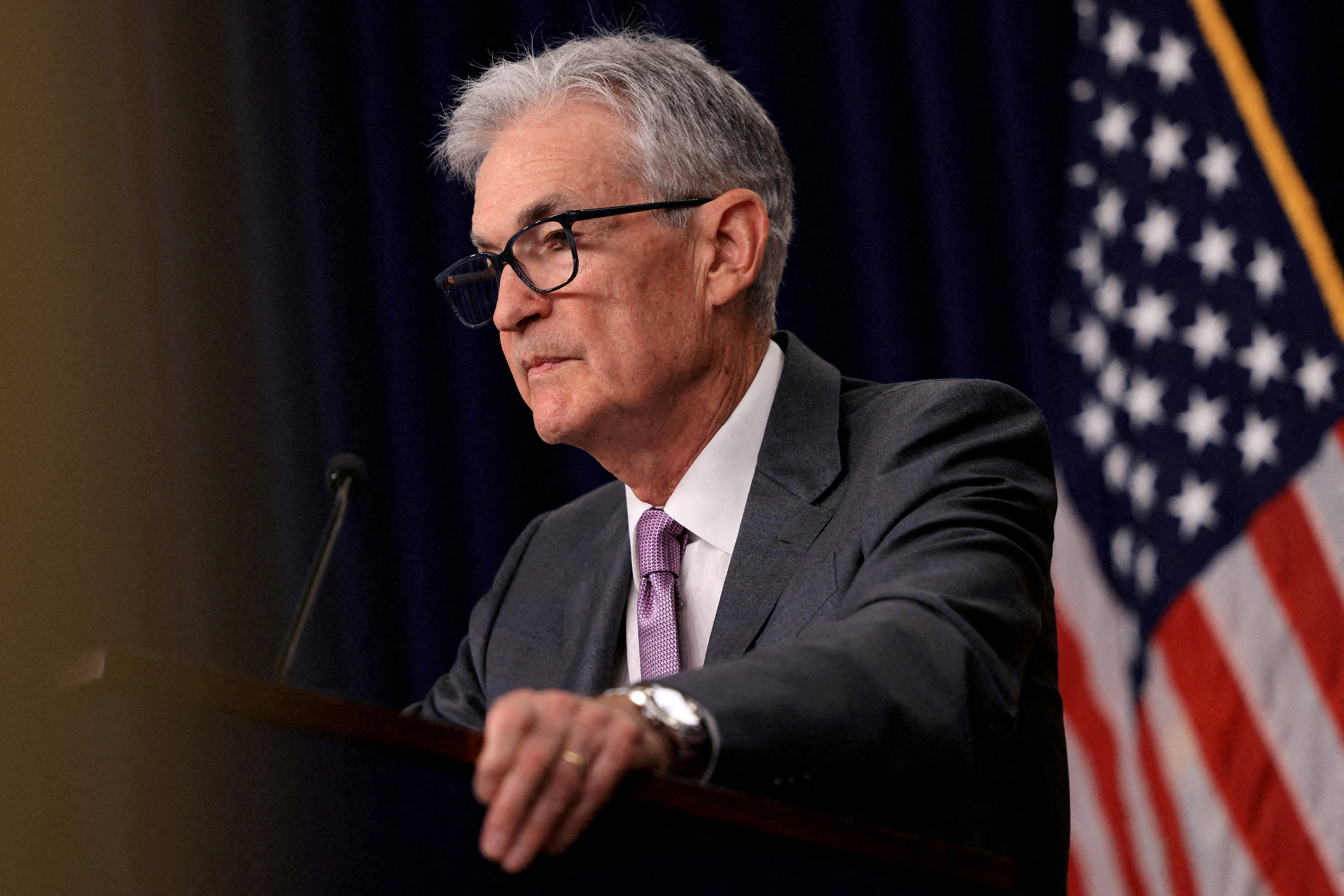

Jerome Powell, the Chairman of the U.S. Federal Reserve, recently delivered a speech at Jackson Hole that has paradoxically driven financial markets to move more quickly and with greater confidence, despite the warnings embedded in his remarks. This speech, which some are already considering his second historic moment following his brief but powerful 2022 address, has been interpreted in various ways by market participants.
A Dual and Measured Approach
Powell adopted a dual approach in his speech. On one hand, he formalized the widely accepted view that «the time has come to adjust policy» and that «the direction of travel is clear.» On the other hand, he provided a historical assessment of the 2021-2024 inflation episode, emphasizing that the Federal Reserve has gained confidence that inflation is on a sustainable path back to the 2% target.
This dual approach allows the Federal Reserve to maintain considerable tactical and strategic flexibility. However, what stood out was what Powell did not mention: he resisted offering specific guidance on the size of the interest rate cut in September and, more importantly, on the final destination of these rates.
Market Reaction: Beyond Powell’s Words
Despite Powell’s caution, the market’s immediate reaction was to accelerate expectations of aggressive interest rate cuts. This is because, despite the Fed Chairman’s clear warnings, markets have interpreted the speech as a signal that the central bank might be more focused on avoiding an increase in unemployment than on continuing the fight against inflation.
Powell explicitly stated that «the labor market has cooled considerably,» which has reduced the threat of higher inflation and increased «downside risks to employment.» However, he stressed that the Federal Reserve «does not seek nor welcomes further cooling of labor market conditions.» These words have been interpreted by the markets as a sign that the Fed might be leaning toward a more relaxed policy, focusing on maintaining employment rather than continuing an aggressive fight against inflation.
A Shared Error and Lessons from the Past
Regarding inflation, Powell acknowledged that the Fed was wrong in its initial 2021 assessment that the inflation surge would be temporary and quickly reversible. This error was not unique to the Fed; most mainstream analysts and central bankers in advanced economies shared this mistaken perspective.
Interestingly, Powell did not offer a clear vision of where he sees the new neutral interest rate, which would have been crucial for guiding the markets. Without this clarity, the markets and the analyst community remain stuck in a «ping-pong narrative,» swinging between expectations of a soft landing and recession forecasts.
Where Is the Federal Reserve Headed?
It is likely that the Fed is attempting to solidify a shift in its policy from a single mandate (winning the battle against inflation) to a dual mandate (price stability and maximum employment). However, the markets appear to be in a different place, strongly betting on a Fed solely focused on employment and expecting significant interest rate cuts in the coming months.
Before Jackson Hole, the markets were already anticipating a policy shift that would result in considerable rate cuts over the next 12 months. Ironically, Powell’s speech has not only failed to dispel this expectation but has reinforced it. In their eagerness to stay ahead of developments, the markets are ignoring Powell’s warnings about the «limits of our knowledge,» which could lead to greater market and narrative volatility in the coming months.
Conclusion
Jerome Powell’s speech at Jackson Hole has been interpreted by the markets in a way that, though ironic, reflects the complexity of the current economic situation. The Fed, despite its efforts to maintain flexibility and caution, faces a market determined to move swiftly, potentially in a direction that could increase volatility and uncertainty in the months ahead.
Deja una respuesta