
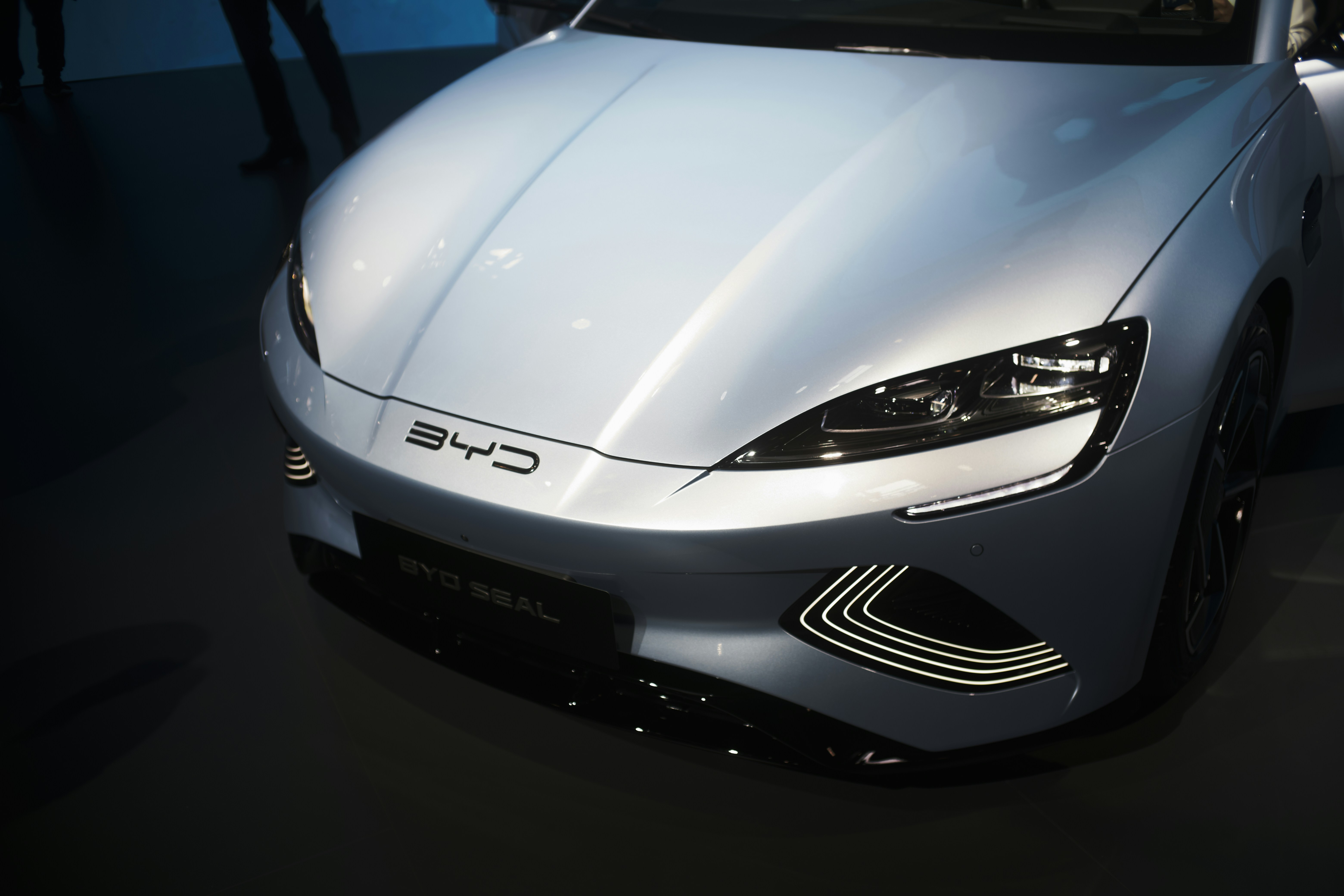
China’s automotive market is undergoing a radical transformation. By 2025, electric vehicles (EVs) are on track to surpass internal combustion engine cars in sales, marking a turning point that could redefine the dynamics of the global automotive industry. This phenomenon highlights the rise of Chinese manufacturers such as BYD, NIO, and Xpeng, while challenging automotive giants from Germany, Japan, and the United States.
Figures That Support the Shift
According to the latest estimates, EV sales in China are growing at an annual rate of 20%, with projections exceeding 12 million units by 2025. This figure more than doubles the 5.9 million vehicles sold in 2022 and significantly surpasses the targets set by Beijing. Meanwhile, traditional car sales are in decline: they are expected to drop by over 10% in 2024, reaching less than 11 million units, a significant decrease from the 14.8 million sold in 2022.
In contrast, EV growth in Europe and the United States has slowed due to regulatory uncertainty, inadequate infrastructure, and rising protectionism against Chinese imports. This disparity underscores how China is consolidating its leadership in the transition to more sustainable mobility.
The Keys to China’s Success
China’s dominance in the EV market is no coincidence. Robert Liew, Director of Renewable Energy Analysis for Asia-Pacific at Wood Mackenzie, highlights that the country has successfully developed its own technology and secured global supply chains for critical materials needed for batteries. Additionally, the scale of production has led to significant cost reductions, translating to more competitive prices for consumers.
China is also rapidly electrifying its fleet of commercial and public vehicles, from buses to delivery trucks, reinforcing its commitment to carbon neutrality. As a result, the goal of EVs accounting for 50% of total car sales by 2035 could be achieved a decade earlier than anticipated.
The Response of International Rivals
The rise of Chinese manufacturers is also impacting foreign automotive giants. The market share of foreign brands in China dropped to a historic low of 37% in 2023, compared to 64% in 2020. Companies like General Motors, Volkswagen, and Toyota face significant challenges:
- General Motors lost over $5 billion in market value in China this month alone.
- Volkswagen, through its parent holding company, recorded a depreciation of up to €20 billion.
- Nissan and Honda announced a merger to tackle the “drastically changing business environment.»
The slow rollout of new EV models by these companies has also worked against them. While Chinese manufacturers plan to introduce around 90 new EV models in Q4 2024 alone, many international brands do not expect new launches until 2025 or 2026.
Consolidation in the Domestic Market
The explosive growth of EVs in China is also driving intense competition among domestic manufacturers. Yuqian Ding, an analyst at HSBC, asserts that market consolidation is inevitable, with more manufacturers facing financial pressure or exiting the market in the coming years. However, this competition is also fostering innovation and diversity in offerings, benefiting the end consumer.
What Does This Mean for Investors?
For investors, China’s EV market represents both an opportunity and a risk. On one hand, Chinese companies are leading the global transformation toward sustainable mobility, with significant growth potential in the coming years. On the other hand, market consolidation could eliminate weaker players, making careful analysis essential when choosing where to invest.
From a global perspective, foreign manufacturers that fail to adapt quickly could see their relevance eroded in one of the world’s largest and fastest-growing markets.
| BYD (01211) | NIO (NIO) | XPeng (XPEV) | LI Auto (LI) | Tesla (TSLA) | General Motors (GM) | Toyota Motor (TM) | Ford (F) | Stellantis (STLA) | |
|---|---|---|---|---|---|---|---|---|---|
| Price | 258.2 HKD | 4.5 | 11.5 | 24.0 | 379.2 | 51.3 | 193.1 | 9.6 | 12.7 |
| Market Cap. | 750.59B HKD | 9.68B | 11.12B | 26.26B | 1.32T | 56.93B | 256.01B | 39.27B | 35.96B |
| 52W H | 320.8 HKD | 8.0 | 15.6 | 46.4 | 488.5 | 61.1 | 250.5 | 14.4 | 27.6 |
| 52W L | 164.3 HKD | 3.6 | 6.5 | 17.4 | 138.8 | 33.9 | 156.7 | 9.2 | 12.1 |
| Net Margin | 5.23% | -33.22% | -18.01% | 4.50% | 6.70% | 6.32% | 8.01% | 2.97% | 6.64% |
| PE | 19.9 | -3.1 | -13.8 | 18.8 | 112.4 | 5.5 | 9.7 | 11.2 | 2.8 |
| PB | 4.3 | 6.2 | 2.5 | 2.8 | 18.8 | 0.8 | 1.1 | 0.8 | 0.4 |
| PS | 1.0 | 1.1 | 2.2 | 1.4 | 13.5 | 0.3 | 0.8 | 0.2 | 0.2 |
| Div. Yield | 1.32% | N/A | N/A | N/A | N/A | 0.87% | 2.87% | 6.07% | 13.26% |
| Intrinsic Value | 320.6 HKD | 6.1 | 14.2 | 30.5 | 298.7 | 57.9 | 231.9 | 11.4 | 14.7 |
| Margin of Safety | 24.16% | 35.55% | 23.47% | 27.08% | -21.22% | 12.86% | 20.93% | 18.75% | 15.74% |
Conclusion
Electric vehicles are no longer an option—they are becoming the norm, and China is at the forefront of this revolution. For investors, understanding the dynamics of this market and its global implications will be key to identifying opportunities and mitigating risks in the future. Will you be part of the change or get left behind?
Deja una respuesta