
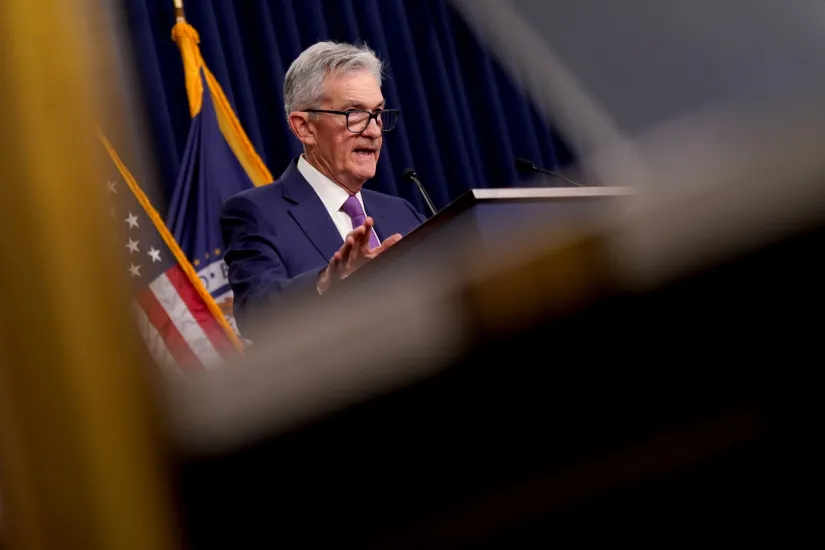
The Federal Reserve recently entered a pivotal «wait-and-see» phase, signaling a pause in interest rate adjustments after three consecutive cuts. This decision, led by Chair Jerome Powell, underscores a cautious approach amidst persistent economic uncertainties and renewed political tensions, notably criticism from former President Donald Trump. Let’s break down what this means for investors and the broader economy.
Fed Policy: Navigating Between Inflation and Growth
At its latest meeting, the Fed left the federal funds rate unchanged at around 4.3%, marking a shift from its previous series of cuts. Powell highlighted the Fed’s current stance as «significantly less restrictive» compared to last year, emphasizing that the central bank is not in a rush to adjust rates further.
This approach aligns with the Fed’s objective of achieving a 2% inflation target while maintaining economic stability. Powell noted that further rate cuts would only be considered if there is «real progress on inflation» or unexpected weakness in the labor market.
Despite Powell’s optimism for continued disinflation, he remains cautious: «We seem to be set up for further progress on inflation, but having it is another matter.»
Political Pressure and Market Reactions
Former President Trump was quick to criticize the Fed’s decision, blaming Powell for past inflation mismanagement and promising to take control of price pressures through aggressive policy changes. This political interference echoes past tensions during Trump’s first term when Powell defended the Fed’s independence from executive influence.
For investors, market reactions to the Fed’s announcement were mixed. Stocks declined, and the yield on the 10-year Treasury note remained relatively stable at 4.554%. This reflects lingering concerns about economic growth and the potential for interest rates to remain higher for longer.
The Fed’s Dilemma: Balancing Act Ahead
The Fed now faces two critical questions:
- Is inflation decelerating sufficiently to reach the 2% target within the next two years?
Core inflation stood at 2.8% in November and is expected to remain at this level for December. However, uncertainties about wage growth and commodity prices persist. - Are current interest rates restraining economic activity enough without hindering growth?
While the Fed’s rate cuts have moderated some financial pressures, sectors like real estate and long-term investments remain burdened by historically high borrowing costs. Investors in rate-sensitive assets, including real estate and equities, face challenges as the 10-year Treasury yield remains elevated.
What’s Next for Investors?
The outlook for monetary policy remains uncertain. Analysts see two plausible scenarios for the Fed in 2025:
- Scenario 1: If inflation continues to decline steadily, the Fed may begin cutting rates as early as spring.
- Scenario 2: If inflation proves stickier than anticipated, rates could remain unchanged throughout the year.
Nathan Sheets, Citigroup’s chief economist, highlighted the delicate balancing act: «They want to avoid unnecessarily slowing down the economy while not undoing the progress on inflation.»
Richard Clarida, former Fed vice chair, emphasized that the Fed’s current strategy provides «optionality» to adapt as economic conditions evolve.
Investor Takeaway: Stay Vigilant and Strategic
In this dynamic environment, investors should adopt a vigilant approach:
- Focus on Fundamentals: Companies with strong balance sheets and robust cash flows are better positioned to weather interest rate volatility.
- Diversify Investments: Maintain exposure across asset classes to mitigate risks associated with rate-sensitive sectors.
- Monitor Fed Signals: Keep a close eye on economic data and Fed communications to anticipate potential rate changes.
The Fed’s current stance highlights the complexity of navigating a post-inflationary economy while maintaining its independence from political pressures. As Powell aptly noted, «Don’t look for us to do anything else but analyze the data.»
At WSV Research, we continue to monitor these developments closely, providing investors with actionable insights to navigate these uncertain times. Remember: Stay Informed, Stay Profitable.
Deja un comentario